6 min read
Domestic Manufacturer Status: Which Documents to Check
We explain which documents confirm domestic manufacturer status, how to verify product origin and how to reduce risks when procuring in Kazakhstan.
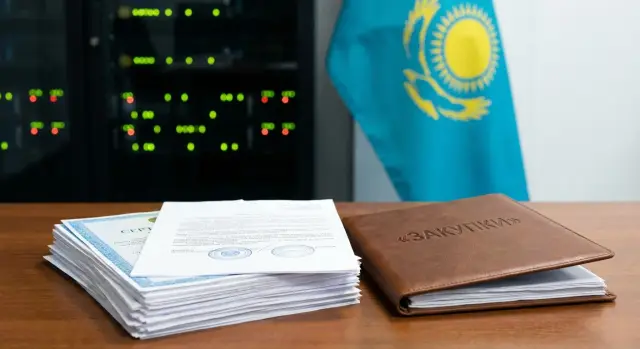
Why checking documents matters before signing the contract
The origin of the goods and the status of a domestic manufacturer are not formalities. They determine procurement conditions: eligibility to participate, application of preferences, local content requirements, and whether the contract will pass later inspection.
Problems often surface not at the supplier selection stage but later: funds are already planned, equipment delivered, documents sent to accounting. If it turns out that confirmations are issued incorrectly or don’t apply to the specific procurement, corrections usually take a long time.
It’s especially critical to check documents in advance when procurement is funded from the budget, quasi-state funds, grants or credit lines, or when there is treasury oversight, internal financial control, audit or strict acceptance before payment.
Confirming origin and status before signing reduces the risk of surprises after delivery. For equipment this is doubly important: “assembly” and “manufacture” are treated differently, and origin documents must match what’s recorded in the contract, specification and invoices.
Typical risks if you postpone checking:
- refusal or delay of payment due to mismatched confirmations;
- requirement to return the advance or renegotiate the contract and specification;
- loss of local content preferences and price recalculation;
- fines and claims after control or audit;
- contract termination if origin was a material condition.
A common reason for these situations is simple: when choosing a supplier people focus on price and deadlines, and only prepare documents before payment. Then it turns out a confirmation is issued for another model, another period, another legal entity, or it doesn’t meet the needed criteria.
Example: a batch of workstations is procured with a local content confirmation requirement. The supplier promises “domestic”, but the contract doesn’t specify which confirmations and when they will be provided. At payment, the controller asks for evidence and finds some items don’t meet the claimed status or documents are issued for a different manufacturer.
Even when you buy equipment from a manufacturer who claims official status, check before signing: which documents they will issue, for which models, and how this will be reflected in the contract and closing documents.
Simple terms: what exactly do confirmations prove
Confusion often starts not from the absence of documents but from terminology. The contract and confirmations may mention “manufacturer”, “assembler”, “supplier”, “dealer”, and for procurement control these are different roles.
A manufacturer is responsible for producing goods: they organize the process, are accountable for quality, record production and have production facilities. An assembler may perform only some operations (for example, final assembly) and might not meet the required level of local content. A supplier sells and delivers under the contract and may have no relation to production. A dealer is a sales channel; dealer status alone doesn’t prove origin.
Origin documents should show where and by whom the product was made and exactly what is being delivered under your specification. Ideally they are tied to the product name, model, country of origin, and sometimes batch or serial numbers. Otherwise a document may exist but apply to a different item.
In Kazakhstan procurements, the status “domestic manufacturer” is not just company registration in the country. It generally means real production inside the country, confirmed by official status and documents on local content. This matters when a customer expects preferences or local content is checked.
Why letters on letterhead often fail: a letter is a statement, not proof. It can be attached as an explanation, but financing and control usually require verifiable confirmations.
Before signing, it helps to answer three quick questions:
- who is the actual manufacturer and who is the supplier under the contract;
- what the document is tied to (model, specification, batch);
- whether the document confirms origin in Kazakhstan and local content, not just quality or conformity.
Which confirmations are most often requested in Kazakhstan
In practice, the customer and controllers look not only at price and specs but also at evidence of origin and the roles of the parties: what the product is, where it was produced, who provides warranty and service.
Typically a package from several groups is requested. It’s important the documents relate specifically to your model and delivery, not be generic.
Most often these are:
- documents on country of origin (certificates, declarations, statements or other forms used by the specific customer);
- confirmation of inclusion in registries or lists if the procurement requires it;
- documents from the manufacturer: warranty obligations, proof of the supplier’s authority, confirmation letters;
- technical documents for the model: specification, manuals, markings, serial numbers or rules for their formation;
- service documents: warranty terms, claim procedure, service contacts and addresses, confirmation of on-site service availability.
For origin it’s especially important to align details: model, manufacturer, country, validity period, batch, date. Any mismatch (for example, one model in the specification and another in the origin confirmation) almost always leads to additional requests.
If the procurement relies on registry checks, reviewers look not only for an entry but for its relevance: validity period, correct product category, and matching manufacturer name.
Warranty and service are separate attention areas. Controllers need to know who handles claims, within what deadlines and where. A vague “12-month warranty” without a clear claim process and contacts is often considered weak.
What is usually required for financing and procurement control
When procurement goes through a bank or leasing, document checks become a condition for financing. The financier needs to understand two risks: whether the delivery will pass on paper and whether origin and configuration can be confirmed without disputes.
Financing (bank/leasing): common questions
They typically ask not “what papers exist” but which confirmations affect asset acceptance and payment terms. They usually check:
- whether grounds exist to state domestic manufacturer status and how it’s confirmed;
- how origin is proven (manufacturer, country, serial numbers, batches);
- whether invoice, contract and specification list the same models and characteristics;
- who provides warranty and service and whether service availability is confirmed;
- how acceptance is documented and what the payment conditions are.
Banks care about consistent naming and codes across documents so they all align without ambiguity.
Procurement control: what they verify in documents and in fact
Control services match documents with the actual delivery: model, configuration, serial numbers, completeness, warranty periods. If local content is claimed, they check whether the confirmations apply to the specific line item, not just the company as a whole.
The list of required confirmations depends heavily on the wording of the terms of reference and the contract. A single word can add a requirement or make a document mandatory. Agree in advance exactly what the supplier must provide at shipment and when signing acceptance acts: list of documents, transfer deadlines, liability for discrepancies.
How to quickly check authenticity and applicability of documents
A quick check follows a simple principle: the document must be genuine and apply specifically to your goods and delivery. Even a correct-looking statement won’t help if it refers to a different model, configuration or manufacturer.
First, see who issued the document. The organization must have authority to issue that type of confirmation. If the supplier drafted the document in free form, assess whether it will be sufficient for your financing or control procedures.
Next, check form and particulars. Problems are often obvious: no number, mismatched date, expired validity, illegible signature, edits or corrections.
Most important is product matching. Confirmations should list the same model and designation as in the contract and specification. For PCs and servers it’s useful to verify key configuration items (CPU, memory, drives), country of origin and, if stated, the production site.
A short practical algorithm:
- compare the name, model, item code and configuration in the document, contract and invoice;
- check validity period, document number, signatures, stamps and absence of corrections;
- reconcile batch: serial numbers (if any), waybills, acceptance acts, packing lists;
- verify the chain “manufacturer - supplier - buyer” without gaps in documents;
- record discrepancies in writing and request a corrected set before signing.
A common risk is a correct status but for the wrong delivery. If items are replaced with equivalents but the confirmation remains the same, the document becomes inapplicable.
Example: an institution requests origin confirmation for workstations. The confirmation lists a base configuration, while the specification adds a discrete GPU and a different SSD. Formally that’s a different item. It’s easier to resolve this before signing: adjust the specification to match the confirmation or request confirmation for the required configuration and batch.
Step-by-step check before signing the contract
To pass financing and control without rework, verify documents before you fix price, deadlines and penalties in the contract.
-
Compile a single list of all requirements: customer, financier and control bodies (audit, compliance, treasury, internal control). Note which documents are needed at contract stage and which at delivery.
-
Before finalizing price, request the supplier’s package of confirmations in advance: scans, document numbers, validity periods. It’s important to get verifiable items, not a promise of “we’ll provide later”.
-
Reconcile documents with the technical specification and contract draft. Check that names, item codes, country of origin, manufacturer, validity and coverage (product, batch, series) match.
-
If the product is labeled, ask for a sample marking and, where appropriate, a list of serial numbers or a range for the batch. This helps link documents to specific units.
-
Specify in the contract which confirmations are transferred with the goods and when: originals or certified copies, per unit or per batch, who is responsible for discrepancies and what happens if control rejects them.
Common mistakes that make procurement fail control
Even when a supplier says "all documents are available", checks often stall on details. The usual problem is documents cannot be unambiguously tied to a specific delivery, model or contract condition.
A frequent case is that a confirmation refers to a different model or configuration. For example, the document states an all-in-one with one screen type, while the contract lists a similar unit with a different size, CPU or port set.
Confusion over the parties to the deal is also common: the confirmation is issued for the manufacturer while the contract is with another company, and the authority to supply that product isn’t proven. As a result, the status “apparently exists” but can’t be applied to your delivery.
What most often breaks the check
- the contract and attachments don’t list the documents the supplier must provide with the goods;
- serial numbers or batch identifiers are not recorded in waybills and acceptance acts;
- local content confirmation doesn’t match the name in the specification (codes, names, version);
- primary documents lack a link "contract - batch - device", so the package looks like generic files about the product;
- verbal promises remain instead of documented conditions.
How to remove contentious points in advance
Close risks with contract wording: which documents are delivered, deadlines and format, what constitutes grounds for rejection at acceptance.
Good practice for equipment is to repeat exact commercial names and key parameters in the specification and shipping documents. If each unit has a serial number, record it in acceptance documents. Then a controller can easily link the box, the contract line and the confirmations.
Short checklist before approving the contract
Before approving the contract, gather a basic package and verify logical matches. For a start, the minimum usually includes:
- document confirming domestic manufacturer status (if relevant to the procedure);
- confirmation of product origin (certificate/declaration according to procurement rules);
- documents on local content or share of work (if preferences are claimed);
- a specification with exact models, item codes and configurations;
- supplier details and documents for the signatory.
Then verify by "anchors": exact legal name and BIN, validity periods, model and description match the specification, linkage to batch or serials (if required). Also check that the declared manufacturer and country of origin don’t contradict each other.
One useful request to the supplier that answers many questions:
- which documents will be attached to the contract and the delivery specifically for this model;
- who is the manufacturer and where the product is made, and whether there’s a batch tie;
- which documents must be current on the acceptance date;
- who signs the contract and closing documents and on what grounds;
- what the supplier is willing to state in the contract about origin and liability for false information.
Involve legal or compliance when the amount is large, procurement is budget-funded or quasi-state, preferences are claimed, or documents are issued to another legal entity/brand.
Practical example: equipment procurement and origin check
A quasi-state organization planned to buy office PCs and several servers to update infrastructure. The specification required local origin confirmation and local content proof, and funds were released only after a document package was checked.
At financing approval they requested origin confirmations for specific models, manufacturer status and documents proving the supplier’s right to sell the specific items. They also asked for serial or batch information to link confirmations to specific units.
They found three typical problems:
- the origin document showed a similar model but with a different configuration;
- one confirmation expired before the planned delivery date;
- correspondence mentioned domestic manufacturer status, but the package lacked current confirmation for the needed legal entity.
They fixed this before signing: aligned the specification with the confirmed configuration, added an appendix with a summary table "model - configuration - document - validity", requested updated confirmations and a model-specific letter.
In such procurements always verify three things: model match (name and configuration), validity on the delivery date, and that documents are issued to the actual manufacturer of the purchased goods.
Next steps: simplify checks and reduce risks
To avoid weeks of back-and-forth, make the check repeatable. Prepare an internal template: which confirmations you always request, which only for certain categories, and who makes the final decision.
A practical time-saver: ask the supplier in advance to show examples of documents for the exact models and configurations you are buying — not for “similar goods” or a “previous delivery”.
Include in the contract the list of confirmations, deadlines and transfer format, the right to suspend acceptance or payment for noncompliance, and liability for false information.
If domestic manufacturer status matters for your procedure, work with those who can document the full cycle and support it. For example, GSE.kz declares official domestic manufacturer status since 2015 and offers 24/7 service across the country — but even then the key rule is the same: pre-link confirmations to specific models, configurations and contract conditions.
Final organizational tip: appoint one person responsible for the "evidence showcase" — a folder with current requirements, request templates and examples of correct documents. Verification goes faster and smoother even if managers or commission members change.
Frequently asked questions
When is it better to check origin and manufacturer status — before or after signing the contract?
The best time is **before signing the contract**, when you can still adjust the specification, deadlines and acceptance conditions without pain. After delivery, corrections usually take longer and risks of payment delay or rejection increase.
Which documents are usually requested to confirm product origin in Kazakhstan?
At a minimum — understand which document your procedure requires and make sure it applies to **your model and configuration** and is valid on the delivery date. Also confirm that manufacturer and product names match in the contract, invoice and specification.
Why are letters on letterhead often insufficient instead of confirming documents?
A letter on company letterhead is a statement, not a verifiable confirmation. It can be used as an explanation, but financing, treasury or audit usually require documents that can be directly matched to the goods and checked by their details.
How to distinguish manufacturer from supplier and dealer, and why does it matter?
Look at each party’s role and responsibility. The manufacturer produces the product and is responsible for production and quality; the supplier only sells and delivers under the contract; a dealer is a sales channel, but dealer status alone doesn’t prove origin. Also, "assembly" may not meet required levels of local content.
How do I know a document applies exactly to my model and configuration?
Check that the document lists the same identifiers as your specification: model, article (if any), manufacturer, country of origin, validity period and applicability to a batch or serial range. If the confirmation covers one configuration while your contract describes another, controllers often treat them as different goods.
What do banks or leasing companies usually check before paying for equipment?
Banks or lessors typically want a "stitching" of documents: identical names and models across all papers, clear warranty and service, acceptance and payment terms, and proof of origin that can be linked to the delivery. If they find discrepancies, financing may be paused until fixed.
What do controllers and auditors usually check at procurement acceptance?
Controllers and auditors follow the technical assignment and contract wording, so precision matters. They usually verify delivery against documents: model, configuration, completeness, serial numbers (if applicable), warranty terms and whether confirmations of local content apply to the specific item, not just the company generally.
What must be written in the contract to avoid later problems with documents?
Specify the list of confirmations the supplier must provide, format (original or certified copy), delivery deadlines, linkage to batch or serial numbers, and consequences of discrepancies. With this in the contract, you rely on the written terms rather than verbal promises.
Which mistakes most often cause payment delays or rejection at acceptance?
Common causes are mismatched models or configurations across documents, expired confirmations, documents issued to a different legal entity or manufacturer, and lack of linkage between the contract and a specific batch. Another frequent issue is replacing items with equivalents while keeping the old confirmations.
What to do if a document exists but is issued for another model, period or legal entity?
Record the discrepancy in writing immediately and request the correct set **before signing** or before shipment. If the supplier can’t provide a document for the needed model or configuration, it’s usually easier to adjust the specification or procurement conditions than to try to fix documents after delivery.
